

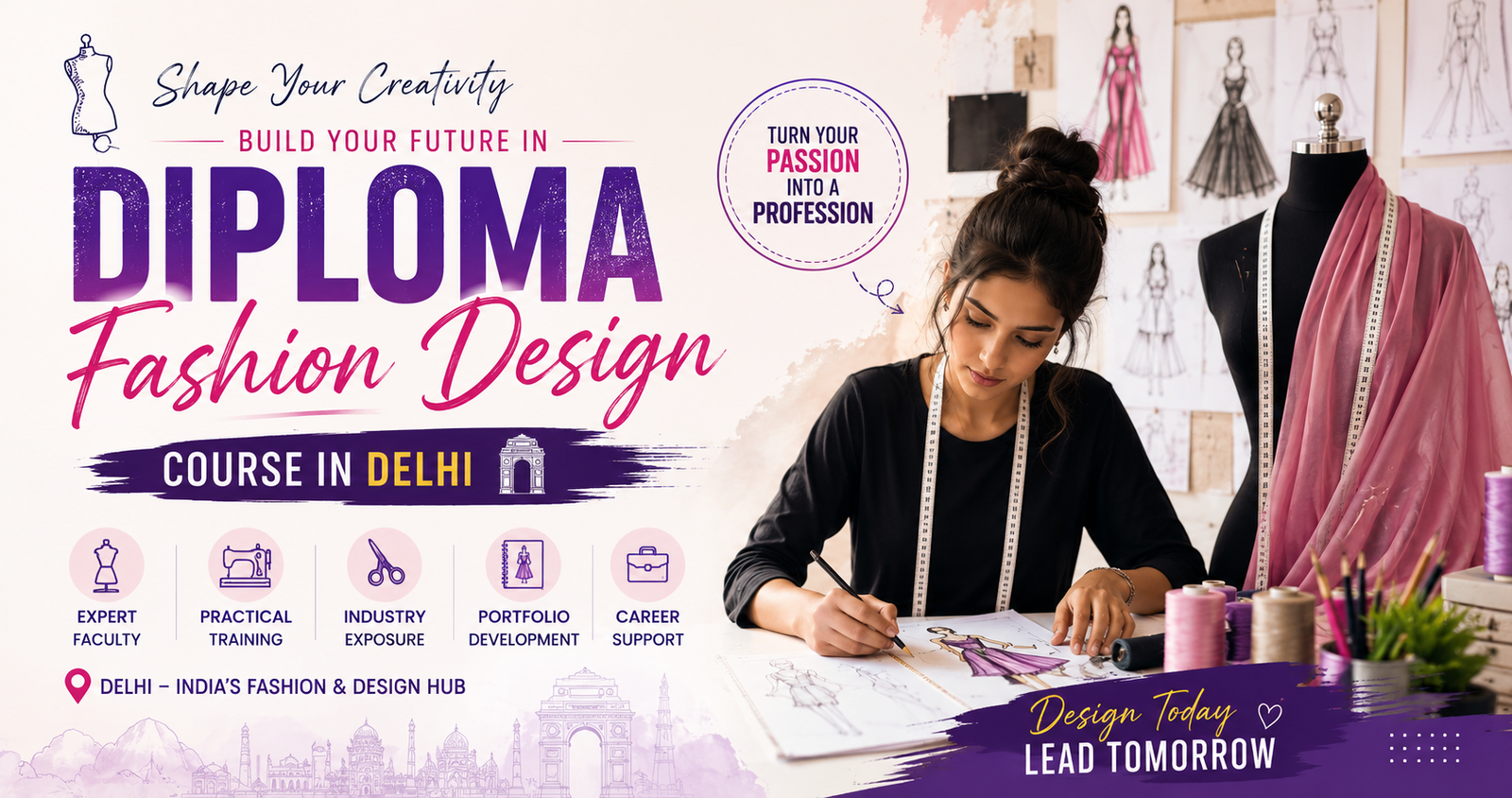
Fashion is more than designing beautiful garments—it is about creativity, innovation, technical knowledge, and understanding market trends. A Diploma Fashion Design Course in Delhi is an excellent choice for students who want to transform their passion for fashion into a rewarding profession. Whether you aspire to become a fashion designer, stylist, entrepreneur, or apparel merchandiser, a diploma program provides the practical skills and industry knowledge needed to succeed.
Do you need help in choosing the best College for Diploma in Fashion Designing? Click here.
Delhi is one of India’s leading fashion hubs, offering access to fashion events, apparel manufacturers, export houses, retail brands, and designers. Studying fashion design in the capital allows students to gain practical exposure while learning from experienced industry professionals.
This diploma course is designed to help beginners and aspiring designers build a strong foundation in fashion illustration, garment construction, textile studies, pattern making, draping, computer-aided design (CAD), and fashion merchandising. You may explore the best diploma fashion designing colleges in Delhi NCR for 2026.
Why Choose a Diploma in Fashion Design?
A diploma program offers focused, industry-oriented training that prepares students for real-world challenges. Unlike purely theoretical education, diploma courses emphasize practical learning through workshops, projects, and portfolio development.
Some key advantages include:
- Industry-focused curriculum
- Practical studio sessions
- Portfolio creation
- Exposure to current fashion trends
- Hands-on garment construction
- Fashion illustration training
- CAD software learning
- Internship opportunities
- Career guidance
- Entrepreneurial skills
Students graduate with the confidence to work in the fashion industry or launch their own fashion labels.
Why Study Fashion Design in Delhi?
Delhi has become one of India’s most important fashion destinations. The city is home to fashion houses, export companies, garment manufacturers, luxury brands, retail chains, and fashion exhibitions.
Studying fashion design in Delhi offers several advantages:
Industry Exposure
Students can observe real fashion businesses and understand how the apparel industry operates.
Fashion Events
Delhi regularly hosts fashion exhibitions, design showcases, and industry networking events that help students stay updated with changing trends.
Internship Opportunities
The city’s thriving fashion industry provides internship opportunities where students gain valuable practical experience.
Better Career Prospects
Graduates can explore employment across multiple fashion sectors including retail, manufacturing, styling, merchandising, and design studios.
Who Can Apply?
The diploma course is suitable for students who have an interest in creativity, clothing, and design.
Generally, applicants should:
- Have completed Class 10 or Class 12 (depending on institute requirements)
- Possess creative thinking abilities
- Be interested in fashion and styling
- Have good observation skills
- Be willing to learn practical techniques
Prior drawing experience is helpful but not mandatory.
Course Duration
Most Diploma Fashion Design Courses are available in different durations such as:
- 1 Year Diploma
- 18 Months Diploma
- 2 Year Diploma
Some institutes also offer:
- Weekend batches
- Fast-track programs
- Part-time courses
- Flexible learning schedules
What Will You Learn?
The curriculum combines creativity with technical expertise.
Fashion Illustration
Students learn to express design ideas through sketches, color rendering, and digital illustrations.
Topics include:
- Human figure drawing
- Fashion poses
- Fabric rendering
- Color theory
- Mood boards
Pattern Making
Pattern making is one of the most important skills for every designer.
Students learn:
- Basic blocks
- Pattern drafting
- Pattern manipulation
- Sleeve variations
- Collar designs
- Garment fitting
Garment Construction
Practical sewing sessions teach students how garments are constructed.
Training includes:
- Machine handling
- Stitching techniques
- Fabric cutting
- Seam finishes
- Garment assembly
- Quality checking
Textile Science
Students gain knowledge about different fabrics used in fashion.
Subjects include:
- Natural fibres
- Synthetic fibres
- Fabric construction
- Dyeing techniques
- Textile finishes
- Fabric selection
Draping Techniques
Draping helps students create garments directly on dress forms.
Topics include:
- Basic draping
- Evening wear
- Dresses
- Gowns
- Experimental silhouettes
Fashion CAD
Modern fashion relies heavily on digital technology.
Students learn software used for:
- Digital illustrations
- Technical flats
- Fashion presentations
- Pattern designing
- Portfolio creation
Fashion Merchandising
Understanding the business side of fashion is equally important.
Students study:
- Retail management
- Fashion marketing
- Buying
- Consumer behaviour
- Product development
- Branding
Practical Learning
Fashion design cannot be mastered through theory alone.
Students participate in:
- Live projects
- Studio assignments
- Design competitions
- Garment production
- Fabric exploration
- Portfolio development
- Fashion presentations
Practical exposure helps students gain confidence while developing professional skills.
Skills You Will Develop
During the course, students build both creative and technical abilities.
These include:
- Fashion illustration
- Creativity
- Colour coordination
- Pattern making
- Garment construction
- Textile knowledge
- Design thinking
- Fashion styling
- Presentation skills
- Time management
- Communication skills
- Problem-solving
Career Opportunities After Diploma in Fashion Design
A diploma opens the door to numerous career paths within the fashion industry.
Popular job roles include:
Fashion Designer
Create clothing collections for brands, boutiques, or independent labels.
Fashion Illustrator
Prepare professional fashion sketches for designers and apparel companies.
Apparel Merchandiser
Coordinate between manufacturers, buyers, and retailers.
Fashion Stylist
Assist celebrities, influencers, magazines, and advertising agencies.
Boutique Owner
Launch your own fashion boutique or clothing brand.
Costume Designer
Work in films, television, theatre, or digital media.
Fashion Consultant
Guide clients on styling, wardrobe planning, and image enhancement.
Production Assistant
Support garment manufacturing and quality control operations.
Industries Hiring Fashion Design Graduates
After completing the diploma, students may find opportunities in:
- Fashion houses
- Garment export companies
- Apparel brands
- Textile companies
- Retail chains
- E-commerce fashion brands
- Design studios
- Fashion magazines
- Costume production
- Boutique businesses
Why Practical Training Matters
Fashion is a skill-based profession.
Hands-on experience enables students to:
- Improve garment finishing
- Understand production processes
- Develop creative confidence
- Build an impressive portfolio
- Gain industry-ready skills
Employers often value practical abilities alongside academic qualifications.
Portfolio Development
A strong portfolio showcases a student’s creativity and technical expertise.
It typically includes:
- Fashion illustrations
- Mood boards
- Garment collections
- Fabric experiments
- Technical drawings
- Pattern work
- Photography
- Design concepts
A professional portfolio is often a deciding factor during interviews.
Entrepreneurial Opportunities
Many diploma graduates choose entrepreneurship instead of traditional employment.
They may establish:
- Designer boutiques
- Online fashion brands
- Custom tailoring businesses
- Fashion consulting services
- Clothing labels
- Fashion styling agencies
Learning both design and business concepts helps graduates manage successful fashion ventures.
Admission Process
Admission generally involves:
- Submit the application form.
- Provide academic documents.
- Attend counselling or an interview (if applicable).
- Complete the admission formalities.
- Begin practical training and classes.
Who Should Join This Course?
This diploma is suitable for:
- Class 10 students
- Class 12 graduates
- College students
- Working professionals
- Homemakers interested in fashion
- Boutique owners
- Aspiring entrepreneurs
- Creative individuals seeking a career in fashion
Frequently Asked Questions
Begin Your Journey in Fashion Design
A Diploma Fashion Design Course in Delhi provides the knowledge, creativity, and practical experience needed to build a successful career in the ever-evolving fashion industry. With structured training, hands-on projects, and exposure to industry practices, students can develop the confidence to pursue roles in fashion design, retail, styling, merchandising, or entrepreneurship. Whether your goal is to work with established fashion brands or create your own label, a well-designed diploma program is a strong foundation for turning creative ideas into professional achievements.

